Estorytellers is a premier ghostwriting and book publishing agency that specializes in delivering high-quality writing solutions customized to the unique needs of authors and businesses. We are the most sought-after ghostwriting company that handles every aspect of your book writing, book publishing, and marketing all under one roof.

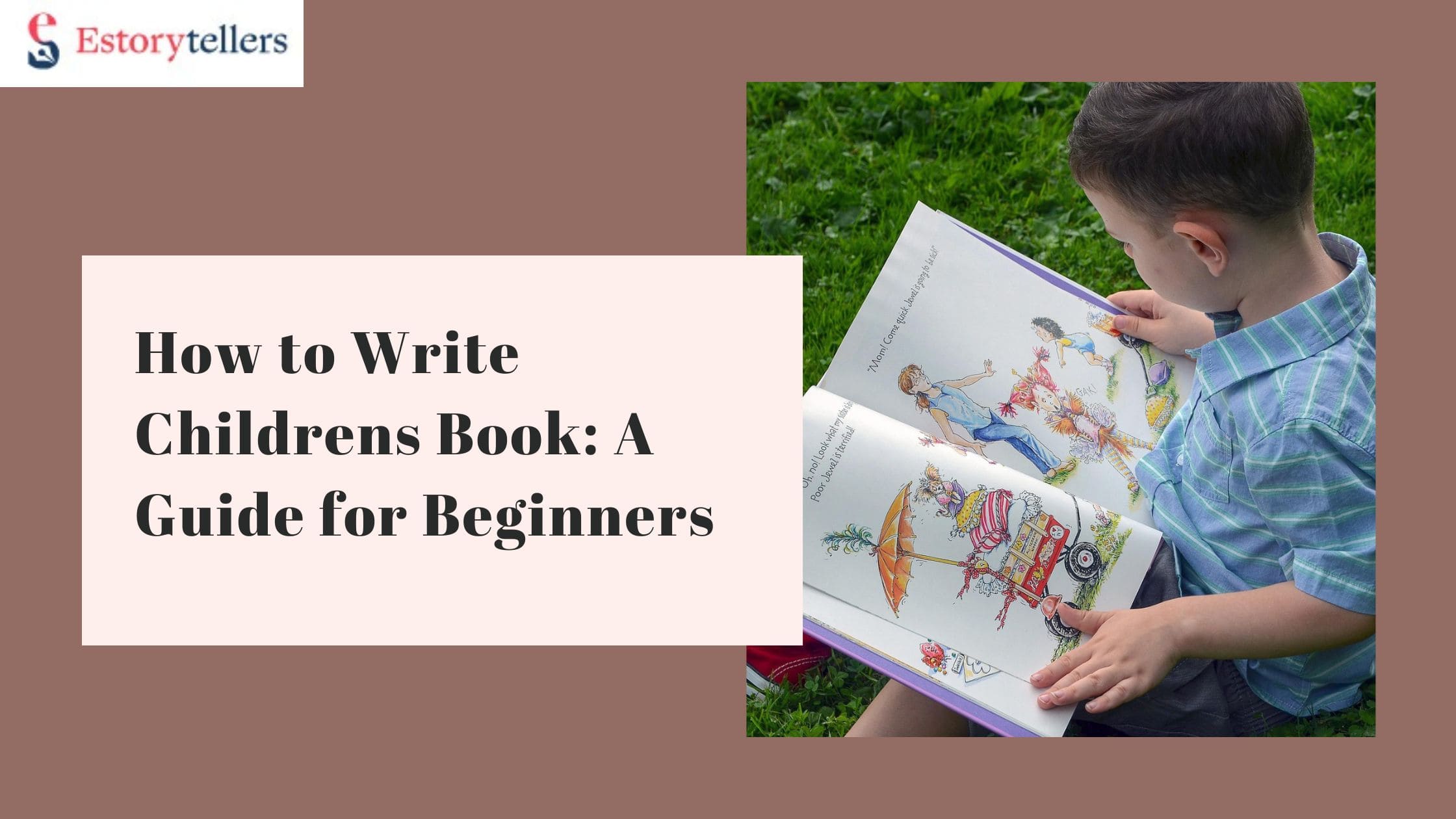
Have you ever wondered how to write children’s book stories that spark joy in young minds and bring deep satisfaction to the writer? Learning how to write childrens book brings joy to both the writer and the young reader, because you have a great story inside you waiting to come out. This creative path offers more than personal fulfillment.
The children’s book market in the US is expected to grow to $13.45 billion in 2029 at a compound annual growth rate (CAGR) of 2.6%, showing a strong and growing demand for fresh voices and new ideas. This guide serves as a clear and friendly roadmap for beginners who want to step confidently into this exciting and rewarding industry.
You will learn to pick the right age group for your story. We explain the best way to structure your plot and characters. You will find tips on editing and finding an illustrator. We discuss publishing options to get your book in stores. This guide makes the whole process simple and fun.
You won’t be able to write for every child at once. A baby needs varied content than a ten-year-old. You must choose a specific niche before you type a single word. This choice will change your word count, your themes, and your illustrations.
New authors often make the mistake of mixing these categories. They might write a long story with complex words, but want it to be a picture book. This does not work in the current market. If you want to know how to write a book for preschoolers, you need to focus on simple words and repetition. Older kids need more complex plots and fewer pictures, whereas younger kids need more visuals.
You should study the chart below to understand where your idea fits.
| Age Group | Target Age | Word Count | Theme Examples |
|---|---|---|---|
| Board Books | 0-3 years | 0-100 words | Basic concepts, lullabies, daily routines |
| Picture Books | 3-8 years | 500-800 words | Friendship, sharing, emotions, school |
| Early Readers | 5-9 years | 1,000-2,500 words | Simple plots, family, humor, action |
| Middle Grade | 8-12 years | 30,000-50,000 words | Fantasy, growing up, complex friendships |
| Young Adult | 12+ years | 50,000+ words | Identity, romance, social issues |
Understanding these groups helps you sell your book later. Parents and librarians look for books that fit these specific boxes.
Writing a book is a journey. You take it one step at a time. This section breaks down the process into manageable tasks.
You might wonder how to start writing a childrens book. The best ideas often come from daily life. Look at your own childhood and think. What scared you? What made you laugh?
You may even observe the children in your life. Listen or notice the funny things they say. Watch how they solve problems. A lost toy or a first day at school can become a magical adventure. You do not need a complex idea. Simple concepts work best for young readers.
Your main character needs to be relatable and not something weird or unrealistic. Kids want to see themselves in the hero. If you write about a squirrel, give that squirrel human feelings that the kid will be able to relate to.
The character must have a clear want. Maybe they want a cookie. Maybe they want to find their way home. This desire drives the story ahead. You need to even give them a flaw. A perfect character is boring. A character who is messy or shy is lovable.
Structure saves you time. You do not need a complicated diagram. A simple three-act structure works wonders for children’s books.
You should ensure the child character solves the issue, not an adult. The child must be the hero of the story.
You need to get the story out of your head. Don’t worry about spelling or perfect grammar right now. Just write. Let the words flow onto the page.
Focus on action. Kids like to see characters doing things. Use active verbs. Rather than saying “The dog was happy,” show the dog wagging its tail. This makes the story come alive.
You must edit carefully. Read your story out loud. This is vital for children’s books. Parents will read these books to their kids at night. The words must have a good rhythm.
If you stumble over any sentence, a parent will too. Fix it. Cut out extra words. If you can say it in five words, do not use ten. Every word must earn its place on the page.
Stories come in various shapes. You must decide what kind of feeling you want to create. Some books exist to make kids giggle. Others help them learn about the world.
Humor is a powerful tool. Kids love to laugh. Funny books make use of exaggeration or silly situations. These books are great for reluctant readers. If a kid laughs, they will want to read more.
You might want to know how to write a bedtime story. These books have a specific job. They help a child calm down. You need to use soft, soothing words. The sentence rhythm should be slow and gentle. The story should end with the character going to sleep or finding a safe place.
Many parents want books that teach or give lessons. You can write about dinosaurs, space, or famous people. These books need clear facts. You must make the information fun. Use comparisons that a child understands. For example, explain the size of a dinosaur by comparing it to a school bus.
When you learn how to write childrens books, you realize that style matters as much as the plot. Your voice should be unique.
Pictures are half the magic. In a picture book, the text and the artwork are together. You do not need to describe everything in words.
If the text says, “Sam put on his red coat,” the illustration shows the red coat. You do not need to add adjectives about the coat. Leave room for the illustrator to tell their part of the story.
You do not need to be an artist. Most authors do not draw their own pictures. You will need to hire a professional illustrator or work with a publisher who finds one for you. Services like Estorytellers can handle this entire process. They match your story with the perfect visual style.
You have finished your manuscript. Now you need to get it into the hands of readers. You have two main paths to choose from.
This is the old school way. You write a query letter. You send it to literary agents. If an agent likes it, they try to sell it to a big publisher.
This path is not easy. Agents get thousands of letters. They pick very few. It can take years to see your book on a shelf. But you pay nothing up front. The publisher handles the printing and distribution.
This path gives you control. You hire your own editor and illustrator. You upload the book to stores like Amazon yourself. You keep more money from each sale.
However, you need to manage everything. You are the project manager. You must ensure the quality is high. A poorly produced book will not sell.
There is a third option that bridges the gap. Estorytellers acts as a one-stop shop for ghostwriting, editing, and publishing in the USA. They may help you create a professional book without the stress of doing it alone.
They handle the hard work. You get expert writers and editors. They also help with publishing and marketing. You own your work completely. This is a smart choice for authors who want professional quality and full ownership.
New authors often fall into the same traps. You need to avoid these if you know what they are.
Your journey from a simple idea to a finished manuscript is exciting. You have the tools now. You understand the audience. You know the steps.
Your story matters. There is a child out there waiting to read it. That child might find comfort, laughter, or a new friend in your pages. Do not let fear stop you.
Professional help makes a huge difference between a rough draft and a bestseller. You do not have to walk this path alone. Expert guidance can smooth out the bumps and ensure your book looks amazing.
Now you know how to write childrens book properly. It is time to take action.
You begin writing a children’s book by choosing a specific age group first. It will help you decide the word count, language, and story style. Then, brainstorm ideas from everyday childhood moments, such as school, family, or playtime. Create a simple character with relatable feelings and outline a clear beginning, middle, and end before writing your first draft.
Children’s books in demand comprise picture books, early readers, middle-grade stories, and young adult novels. Picture books with simple words and strong visuals are popular with younger kids. Funny stories, bedtime books, and educational non-fiction also sell well. Parents and schools prefer books that match specific age groups and focus on emotions, learning, or imagination.
The income from a children’s book varies based on the age group, publishing method, and marketing. Some authors might earn modest side income, while others build long-term revenue with multiple books. With the U.S. children’s book market growing steadily, well-written and professionally published books can generate ongoing royalties, brand recognition, and future opportunities beyond just book sales.
Collaborate with our team of highly skilled ghostwriters and editors to bring your concepts to life in the form of a compelling nonfiction book that earns a spot on the shelves.
 You get subject matter experts
 You get customized samples
 You get unlimited revision*
From ghostwriting to publishing, printing, and marketing — we help you become the author you were meant to be.
📘 Ghostwriting | 🖨 Publishing & Printing | 📢 Book Marketing
✅ 100% Royalties | 📈 Amazon SEO | ✍ All Genres
Get Started Today